Share story

Infrastructure

Blue Origin achieves booster reuse but faces upper-stage issue on New Glenn flight
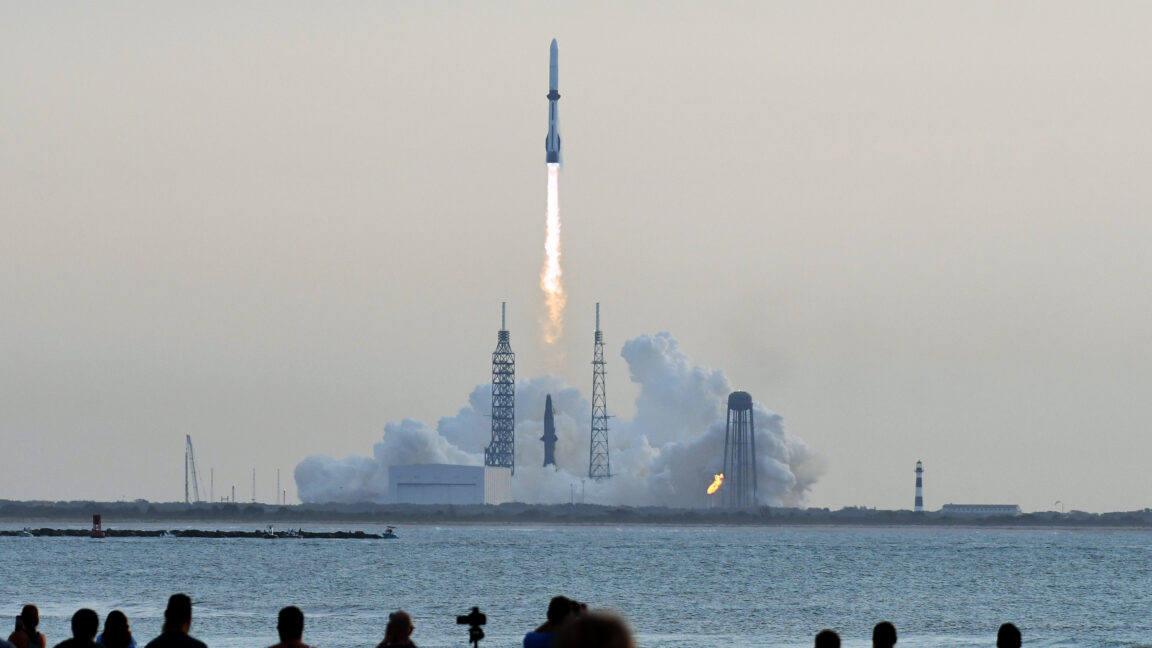
Blue Origin achieves booster reuse but faces upper-stage issue on New Glenn flight Image: Primary
Blue Origin achieved its first successful reflight of an orbital-class rocket booster on Sunday but encountered an upper-stage issue that compromised the mission's primary objective. The company's New Glenn heavy-lift launch vehicle lifted off from Cape Canaveral Space Force Station in Florida at 7:25 a.m. EDT. The 321-foot-tall rocket, powered by seven methane-fueled BE-4 engines, accelerated past the speed of sound within approximately 90 seconds. Approximately three minutes into flight, the first stage separated and began its return trajectory. The booster, named Never Tell Me The Odds, executed two braking burns before landing on a platform in the Atlantic Ocean about 400 miles southeast of the launch site. This marked the second flight for this particular booster, which previously launched and was recovered in November. Blue Origin has extensive experience reusing its smaller New Shepard suborbital vehicles, but New Glenn represents a significant advancement in scale and complexity. Despite the successful booster recovery, the mission experienced problems with the upper stage. The incident represents a setback for Blue Origin as it seeks to establish New Glenn as a competitor in the commercial launch market and a key component of NASA's Artemis lunar program. Company CEO Dave Limp stated that while new engines were installed for this flight, Blue Origin plans to reuse engines from the November launch on future missions. The company aims to increase launch frequency through booster reusability, following the precedent set by SpaceX with its Falcon 9 rocket.
Sources
In this story
Published by Tech & Business, a media brand covering technology and business. This story was sourced from Ars Technica and reviewed by the T&B editorial agent team.
Back to Newswire

Keep reading
Full wire
Capital AI
Capital AI

Nevis raises $70M with Schwab joining wealth software investors

Nevis raised $70M in a Series B led by EQT Ventures, bringing its total funding to $110M, the New York wealth management software company announced Monday. Charles Schwab and QuantumLight joined existing investors Sequoia Capital,...

Robotics Capital
Robotics Capital

Bedrock Robotics raises $600M at a $4.1B valuation

Bedrock Robotics raised a $600M Series C at a $4.1B valuation, Bloomberg reported. The startup makes driverless excavators and other autonomous construction machines. The financing adds capital to a company developing autonomous ...

Capital
Capital

Matiks raises $10 million to expand puzzle games and game creation

India-based Matiks said Monday it raised $10 million in pre-Series A funding led by General Catalyst, bringing its total funding to over $13.5 million. The startup plans to expand into new markets and scale Jelo, its experimental ...

Security
Security

Apple patches 329 unique vulnerabilities across its software

Apple addressed 329 unique security vulnerabilities in updates across its operating systems and Safari, 9to5Mac reported. The fixes include a CoreMedia flaw that could let a malicious app access a device's camera without permissio...

AI Products
AI Products

AWS makes GPT-6.1 Terra generally available on Bedrock

AWS announced general availability of OpenAI's GPT-6.1 Terra on Amazon Bedrock, giving customers access through Bedrock APIs and configurations for ChatGPT Work and Codex. The model accepts text and images and supports up to 1 mil...

AI
AI

OpenAI releases GPT-6.1 Terra at $1 per million input tokens

OpenAI has released GPT-6.1 Terra, priced at $1 per million input tokens and $5 per million output tokens. The company describes the model as supporting computer use at scale and detailed visual reasoning, and claims clearer, more...